Thursday, September 5, 2013

Memoir of a Kidnap-Victim Parent: Bringing Elizabeth Home.


Title:                      Bringing Elizabeth Home – A Journey of Faith and Hope
Author:                  Ed & Louise Smart with Laura Morton
Genre:                    Non-Fiction
Publishers/Year:  DoubleDay/2003
Pages:                     211
Chapters:                25
ISBN:                      0-385-51214-7
Reviewer:             Sotunde Oluwabusayo


“Hope like faith is the evidence of things not seen. You can’t have faith without hope.”


Every parent had one time or another thought about the unspeakable, unthinkable question: “What would you do if one of your children was taken from you?” – The worst nightmare any parent or family could ever face.

At first I was skeptical about picking the book on the shelf of the book store. It wasn't the usual book I read but I read the summary on the flap of the book and I was hooked – I wanted to know what happened and how the parents coped (Sometimes reading other people's story can help you put things into perspective).

The Book: “Bringing Elizabeth home” tells the story of young Elizabeth Smart (the eldest daughter of Louise and Ed Smart) who was kidnapped by Brian David Mitchell aka Immanuel and his partner Wanda Barzee for 9 months. It is a true-life horrific review of a parent dilemma, facing the possibility of  loosing a child to an horrible experience.

Elizabeth Smart’s story was one of the compelling true crimes that rocked the international media in 2002.

I did not know about Elizabeth’s story during the time it made global news in 2002 but hearing or reading about stories of children kidnapped is not new to me. It’s all in the media.

But when Elizabeth was kidnapped, she became everyone’s daughter.

At first her parent thought she had gone to sleep in another room as it was the norm if Mary Katherine, their nine years old daughter had kicked her in her sleep – but the girl persisted that Elizabeth has been kidnapped.  

Her father assumed that she had had a bad dream.

But she went on, “You won’t find her. A man came and took her. He had a gun.”

Mary Katherine’s account later proved true as it will take Elizabeth’s parent another nine month to find their fourteen years old daughter. This was just few days after her maternal grandfather passed away.

Through it all, memories and family kinship as well as the parent’s marriage were tested as they were all subjected to media and police scrutiny.

They had to cope with the press outside their home twenty-four hours a day, the invasive line of questioning from the police and the pressure of Elizabeth’s absence. The family was on edge all the time.

Leaks to the media were occurring - leading to mistrust between the Elizabeth’s family and the police.

The police asked several questions and even went as far as pointing fingers to the victims. As they say, “Everyone is a suspect.”

Elizabeth’s father – Ed said on his daughter’s disappearance: “They tried to rip apart everything we held near and dear. Our marriage, our children, our integrity, our faith – all of it was put to question after Elizabeth kidnapping.”

At a point after Elizabeth’s disappearance, world famous forensic expert, Henry Lee, who consulted on the OJ Simpson trial, was invited to look into the case to see if there was a missing link in the investigation.

But eventually, with the help of the media and a 911 call from good-willing citizens, they were able to find Elizabeth and her abductors - Brian David Mitchell and Wanda Barzee.

Mary Katherine’s description of Elizabeth’s abductor which had been ignored by the Salt Lake police was later televised on the TV show: “America’s Most Wanted” - thanks to the photos provided by Wanda Barzee’s son.

Elizabeth’s parent met Brian David Mitchell (the man who would later kidnap their daughter)  as one of the local homeless persons who do little yard work for them. But he did not give them his real name; rather he called himself “Immanuel.” It was after he kidnapped Elizabeth that “Immanuel” was not his real name.

Though not many parents are as lucky as Elizabeth’s parent, the book gives a sense of hope that miracle still happen and even if you have lost a child or relative to kidnapping, you can channel your pain towards helping other people   – at least in your own little way.

While noting that regretfully, such miracles do not always happen in kidnapping cases; Louise and Ed in their word said: “Having our daughter back home, in our arms, is nothing short of a miracle. It is the ultimate proof that God answers prayer. Granted sometimes the answer is not the one we pray for, but still it remains an answer.”

One of the good things that however came out of the ordeal was that the family became stronger than before and even the Amber Alert bill and the Child Protection Act was signed into law by then US president, George W. Bush.

“Bringing Elizabeth home” though tells the story of a parent’s struggle through the time of waiting, the pain, guilt, suspicions, disappointment  and frenzy media who would do anything to sell their story (to the extent of brandishing the story to suit their purpose); life lessons on hope, faith, survival and the importance of family and friends in everyday life were quickly brought into the attention of the readers.

The book was written by Elizabeth’s parent, exploring the pain in their heart concerning the situation and the joy that goes with finding their missing daughter.

Indeed, the story drove one important point home: that no matter how we try in this world, there are always sick and twisted people that may want to mar your happiness but with faith, everything can return to “normal” - There is always a light at the end of the tunnel and good do triumph evil if there is hope and strong faith in God.

“Though our experience was painful, through our faith and a trust in God’s power we gained tremendous strength, which became the cornerstone of how we survived,” Elizabeth’s parent recounted in the book.

Another point driven home in this book is that: Nothing is more important than family.

Family, the prayers of so many friends and strangers and trust in God are what got them through this experience –and having survived, they have no doubt that they can preserve any situation as long as those three things are in their lives.

However, Ed and Louise, though I respect their privacy, somewhat fail to give a detailed account of what it was like to "cope" during this trying period and most of the time their religion and being a devout Mormon family  came into bear too many times to count.

Regardless, the book is an emotional and enjoyable read – giving hope that all is not lost if only there is faith.

After reading the story, I could not help but find out how Elizabeth is fairing. Today Elizabeth Smart is a “Smart” young lady living her life as an example of faith and hope with her husband. Her abductor, Brian David Mitchell and Wanda Barzee are both serving time at the federal prison.

Elizabeth’s book “My story” will be out on October 7, 2013 - recounting her nine months ordeal  - eleven years after her painful and rewarding journey .
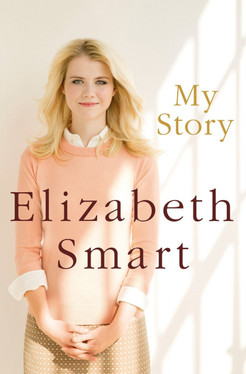

                                                                 My Story Autographed by Elizabeth Smart

I hope I get to read it J - to remind me once again that Miracles do happen. 

Tuesday, August 27, 2013

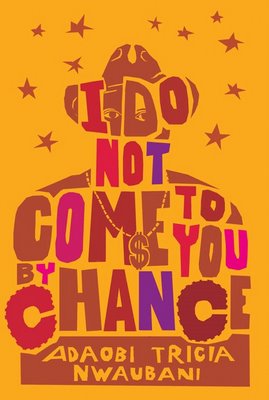
Book Review: “I Do Not Come To You By Chance” - An Eye-Opener To The Troubles Of Everyday Nigerian


Title:                      I Do Not Come To You By Chance
Author:                  Adaobi Tricia Nwaubani
Genre:                    Fiction
Publishers/Year:    Cassava Republic/2009
Pages:                     339
Chapters:                45
ISBN:                      9784851824
Reviewer:             Oluwabusayo Sotunde


With struggles of unemployment, social decadence and the zeal to make it in a society that is ridden by corrupt people, the novel “I Do Not Come To You By Chance” chronicles the realities that lead people into a life of crime.

Presented in a satirical form to open the window into the realities of the “socially-declined populace” who got themselves involved in a fast-paced life, “I Do Not Come To You By Chance” tells a familiar story from an unfamiliar angle in a twisted and funny way.

It chronicles the life of a young man, Kingsley Ibe, who assumed the role of a loving son, self-sacrificing brother, disappointed lover, and savvy 419er – a distinction from the way his England-educated, civil servant father would have wanted him to turn out.

Kingsley Ibe, the protagonist in the novel, is the first-born son (opara) of his family. A fresh graduate of engineering from a family that has highly prized education and despised those who chase money instead of knowledge, Kingsley is committed to his college sweetheart, Ola, and he is confident that his brilliant results will get him a good job in an oil firm so that he can support his and Ola’s families.

Sadly, Kingsley receives multiple rejection letters while Ola - with the pressure from her mother loses faith in his ability to ever provide for her needs; particularly in doing the right thing by her in paying the ‘shuddering’ bride price associated with the Igbo tribe of the eastern part of Nigeria. As Kingsley put it; “Marrying an Igbo girl entails much more than fairy-tale romance and good intentions.”

While he was still battling with how he was going to win back Ola and his mother, a family crisis ensued as his father’s illness took a worse turn thereby taking the Ibe’s family from the edge of poverty to its depths.

Kingsley becomes more desperate as his ailing father's health dwindles and he had to either succumb to the wills of the fast-lane life of his uncle Boniface, aka Cash Daddy (a secondary school dropout turned email scam billionaire) or hold on to the moral principle that “stripped” his parents of everything but their pride, particularly when he had learnt that one must have a “long leg” to survive in his country.

Kingsley gradually made his choice by succumbing to his maternal uncle’s fraudulent world. Cash Daddy, a conman of blubbery greed and unabashed naked exhibitionism was happy to help as long as Kingsley uses his formally educated brain to aid his immoral schemes. As Kingsley puts it, "He could probably even talk a spider into weaving silk socks for him."

Cash Daddy represents the image of a bushman rising from grass to grace. His behaviour is disgusting and at the same time daring whether he is devouring a meal with his hands, quoting the Bible or taking a business meeting while defecating.

Kingsley journey into an immoral lifestyle was gradually woven from Kingsley’s parents’ courtship in the prologue to establish that Kingsley and his immediate family were not the type who would bend to any scam.

Its short chapters and grueling descriptions of some of Nigeria’s discomforts on health care and public transport are used to exhibit the reality of everyday life in the Nigerian society. 

The novel is an eye-opener to the troubles of everyday Nigerian – from the struggles of unemployment down to the struggle of trying to make it in a society that is ridden by corrupt people; the mind- boggling lifestyle of the 419ers (Referenced by their Nigerian penal code number, the 419 scam) as well as the poor health services in which patients have to buy their own bandages and IV fluids are also some of the issues that endear one to read the novel.

Even Kingsley’s old school mate, Andrew Onyeije, whom he met at the airport crooned “I love Nigeria soooooo much, whatever happens, I’m gonna come back here and settle someday. With my family.” But he was quick to change his patriotic tune when his American passport was stolen at the airport, he screeched, “This country is seriously fucked up.” But Kingsley was quick to interject in his narrative voice that “The country is not fucked up and certainly not a place for idealising and auld lang syne” but that “Once you faced the harsh facts and learned to adapt, Nigeria became the most beautiful place in the world.”

Nwabani weaved the Kingsley’s story in such a way that you begin to see things from a con-artist point of view and even cheer him on in his escapade. It becomes more enchanting when one sees how Kingsley systematically cons a mugu who blindly falls into the trap he set for them.

It’s a fairly overwhelming scenario with Kingsley using his education to draft e-mails urging anonymous mugus.  No one will buy it, Kingsley thinks at first. “Who on this earth was stupid enough to fall prey to an e-mail from a stranger in Nigeria?” Then the replies begin to come. Someone in Auckland, another in Cardriff , then a woman in Wiscosin. “Soon we were on first-name terms. It was almost like staying up to watch a dreadful movie simply to see what happened at the end.”

As Kingsley falls reluctantly under his mentor's spell and discovers his own innate flair for the art of the confidence trick, Nwaubani takes us deeper into the intricate world of the Nigerian e-mail scam. She gave detailed exposition of the methods deployed to string along Western suckers who are gradually converted into a mugu.

Targeted mugus get emails like - "Dear Friend, I do not come to you by chance. Upon my quest for a trusted and reliable foreign business man or company, I was given your contact by the Nigerian Chamber of Commerce and Industry. I hope that you can be trusted to handle a transaction of this magnitude"- and surprisingly the victims get caught in the fraudster’s web. People like Winterbottom, Mirabelle and Hooverson were silkily dubbed through Kingsley gang fraudulent act.

Kingsley method of conning his victim is also humorous that one finds himself laughing out loud at the gullibility of the victims. The one who stole the show the most was Cash Daddy, who with his bush-like attitude of conducting business meetings in the toilet and eating with his mouth open inject humour and his witty sayings and proverbs endear us more to understand the world of the con-artist the more.

As a narrator, Kingsley infuses his own story with humor, warmth, and no small amount of rueful regret bemused him by the place in which he finds himself. In his own view, he sacrificed himself as the family messiah to haul them out of poverty and yet he believed he was not appreciated for his effort. In the end, he yielded to using Cash Daddy’s word that “relatives are the cause of hip diseases.”

Meanwhile, Cash Daddy, tired of just making money, dabbles into politics and gets himself killed. Upon Cash Daddy’s death, Kingsley refuses to take over the reins of leadership of the organisation as he felt in control of his destiny for the first time in years.

The theme of a good person tempted by circumstances to do bad things is not a new one in literature, but author Nwaubani makes it fresh by plunging the reader into a dizzying new world of 419ers (scammers) and the  mugus (victims). Her characters are fully fleshed out and dimensional. The novel reveals larger-than-life characters, impressive operations and the greedy westerners that make up both sides of the 419 business.

The strength of the novel becomes apparent when the good versus evil distinction begins to blur – especially for Kingsley. The narrative soars when Kingsley is detailing the 419 work of Cash Daddy’s inner circle – a much more complicated world. It is a world where a gullible mugu deserves no sympathy. When Kingsley expresses doubt to his uncle, Cash Daddy responds: “Do you know this is the man whose money is going to feed your children and your children’s children children?” He condemns Kingsley’s ‘holier than thou” attitude by telling him, “You say you don’t eat rat but you want to taste only the tail. Please don’t close my ears with all this rubbish about education. Me I don’t believe in film tricks. I believe in real life action.”

Cash Daddy further reassures him that his sympathy is misplaced. “Why are you taking Panadol for another person’s headache?” he asked. “Don’t think America and Europe is like Nigeria where people suffer anyhow. Over there, their governments know how to take good care of them. They don’t know anything about suffering.”

Thus, readers are invited to see the whole fraught relationship between Africa and the West in the microcosm of deceptively simple e-mails from Nigeria. There is a vivacious anger underneath all the tricks and the levity. When challenged regarding the immorality of ripping off unsuspecting Westerners, Nwaubani's characters explicitly cite slavery and the Western exploitation of the Niger Delta's oil wealth as justification; they're merely repatriating capital that they feel was taken from them unjustly.

The picture is further complicated by the charitable use to which a great deal of the embezzled money is put to build schools, pave roads and fund orphanages. "No matter what the media proclaimed," says Kingsley, "we were not villains, and the good people of Eastern Nigeria knew it."

While the novel has a serious undertone, there are many laugh-out-loud moments.  

However, Nwuabani simply rushed the ending of the novel as an eight-page epilogue was quickly constructed to indicate that Kingsley has set up his own organisation where his ever-admonishing mother pays him a visit, showing her acceptance of his new, seemingly legit, status. In reality, it’s a cover up as we see him take a call from a former mugu, Mr Winterbottom, and it is business as usual. This is done perhaps to show that fraudsters like Kingsley still exist in the society under false pretences.

Also, Nwuabani’s elongated the ‘back-grounding” - as she used almost half of the book- the first part of the book- (144 pages) - to explain the circumstances that led to Kingsley’s decision into the e-mail scam world could have been done in a couple of chapters.

 We knew from the start that he was going to make that decision. Probably because of this elongation, the decision to join Cash daddy scam group comes across as escapist as he could have find a way out of the family problem by other means since he had already told his mother that he would be going to live with Aunt Dimma to get a job in the banking sector.

In spite of these imperfections, I Do Not Come To You By Chance is a highly recommended read as it is a no-boner into the realities of the social issues in the Nigerian society. It is alternately funny, tender, satirical and sad and the dialogues are sharp with laugh-out-loud moments. The plot is also relatively simple and the language was easy to follow. 

Though the novel has its flaws, the positives far outweigh the negative as the flaws are compensated as the issues that Kingsley faced were both believable and real.


Thursday, August 22, 2013

The Alchemist: My thoughts on the book


The Alchemist. So much to learn from it. Two lessons I picked out: 

1. We must all find our purpose/Personal Legend in life. No one can do that for us. We'll find help but it is for us to make that decision. 

2. In the process, we learn many things and grow through life. We'll discover that each and everyone of us carry within us a unique power as we take lessons from everything. Of course the journey is never a piece of cake. But, at a point, we'll find out that which we seek is right where we started We must return to embrace it and learn to live life to the fullest. 

The Alchemist is an interesting book. Highly recommended.

Tuesday, July 2, 2013

Will Nigerians Read Books On Mobile Phones? @ofilispeaks


The reading culture of Nigerians has been on a steady decline for some time now. The decline can be attributed to many factors from a tough economy to a general lack of reading interest in the younger generation. Some have even gone as far as blaming the poor reading culture on mobile devices.

Now there is a new app called okadabooks that is putting Nigerian books on mobile phones in a bid to get people to read on phones. The app has a diverse collection of books from Nigerian authors and even past WAEC/JAMB questions with answers.

This all sounds like a good idea, but the question is will Nigerians actually read and buy books on their phone and will students actually study with their phones. 

Check out the app at https://play.google.com/store/apps/details?id=com.okadabooks and let us know what you think about it and the Nigerian reading culture in general.

Monday, February 25, 2013

What are you reading? Keep it short and simple (2)

Here is a sequel to the blogpost  "What are you reading? Keep it short and simple." Well, I promise not to make it a habit of keeping reviews this short.... :-)

I'm currently reading "Quiet" by Susan Cain. The book got a lot of reviews... very good reviews for that matter. Usually, I set my expectations low for books that receive high praises, just so I do not get disappointed. But honestly, even though I'm just in the first couple of pages, I am totally blown away. Quiet makes a good case for us introverts out there. But I think every extrovert, in all their glory, should sit still and read this book. I am loving it so far! Will let you know if I change my mind but I doubt it. Cain, well done! :-)


I decided to punctuate my list of books with this hilarious novel, "Lucy Sullivan is getting married" by Marian Keyes. I think I have read one of Keyes' book before but I'm not so sure. The front cover does not hold much promise but trust me, as soon as you flip past the first chapter, you are glued. The first day, I read it straight into the night. I could not put it down. Reason I slept 3.24am-ish. My alarm went off 5.30am-ish and i finally got out of bed 8.00am-ish with a nagging headache. But the adventure was worth it. I can think of 3 other people who would love to read this book right now! Pure comedy and beautiful romance. Each character play a significant role, one we can all identify with in our day to day life. No long narration from me, go get your copy!


"The Best Advice I Ever Got" by Katie Couric is a collection of powerful "essays" from famous and somewhat famous individuals, each telling us one or two life lessons that served as a pivotal force that helped them get to where they are today. I almost flipped out of my seat when I read Matt Lauer's Sometimes You Gotta Go Off Course. An experience I could totally relate to! What is that saying again? There is nothing new under the sun! Well, I'll recommend this book to every young people, aspiring to be something more :-) And oh, this book was originally bought as a gift... I had to sneak through it to be sure it was worth it. And yes, it was!

 I bought this book for my niece. She said that she enjoyed reading it. Now I can't wait to read it too :-) Have you read a copy? Girl in Translation by Jean Kwok. 

What are you currently reading?


Sunday, January 13, 2013

Preserve my Saltiness: An eBook version now available!


Many people have asked, where can we get a copy of "Preserve my Saltiness?"

The book is still on sale at Florence and Lambard bookstore, 202 Ikorodu road, Palmgrove busstop Lagos.

For people outside Lagos Nigeria, "Preserve my Saltiness" is now available on 3minutesbuy.com! click on the link to buy a copy now!! http://3minutesbuy.com/index.php?route=product/product&product_id=69

Thank you!! :-)

Friday, December 7, 2012

“War is very ugly” Agha ajoka. A Review Half of a Yellow Sun


Book: Half of a Yellow Sun

Author: Chimamanda Ngozi Adichie

Publisher: Farafina

Year: 2006

Chapter: 37 (450pages)

One of the works that brought Chimamanda Ngozi Adichie into limelight was her book, “Purple Hibiscus.” Often described as 21st century feminist, for her continual advocacy for women to have a high sense of achievement and not be apologetic about being independent, the award-winning novelist has also distinguished herself as a remarkable culturalist.

Her authentic cultural voice was expressed in a 2009 TedEX presentation, “the dangers of a single story” where she reiterated her believe in the power of stories. But she warns about the downside of telling a one-sided story. “The single story creates stereotypes and the problem with the stereotypes is not that they are untrue but that they are incomplete. They make one story become the only story,” she said.

In “Half of a Yellow Sun,” Adichie tried to tell a complete story. She told an authentic but fictitious story about the Biafran war, dispelling any cultural misunderstanding of the war that took place even before she was born. Her ability to tell the story accurately is drawn from an in-depth study of what others have written and first-hand stories her father and elders who witnessed the war shared with her. These sources- books and people- were acknowledged in her author’s note. She also pointed out that the intent of the story “is to portray my own imaginative truths and not the facts of the war.”

Half of a Yellow Sun depicts the struggle of the Igbos during the Biafra war. Adichie creatively weaved the novel around the lives of three people- Ugwu, a teenager; Olanna, one of the daughters of the elite; and Richard, a British writer. Drawing from the complex relationship of each of the characters, Adichie narrates their experiences in an interesting way. Her powerful ability to make each character come alive made the historic event a mesmerizing one.

The story in Half of a Yellow Sun is divided into three phases- Pre-Biafra era, Biafra era and Post-Biafra era. The story begins with Ugwu, a young boy being taken from his village to serve as a house-boy of a university professor- Odenigbo. The rich culture of the Igbo ethnic group was seen in Ugwu’s character as he experimented with his cooking skills.

Using an omnipotent point of view (first-person narration), Adichie unveils each of the other characters. Describing Odenigbo, his master, Ugwu says, “Master was little crazy- he had spent too many years reading books overseas, talked to himself in his office, did not always return greetings and had too much hair.” True to his words, these were the traits Odenigbo exhibited throughout the book. Albeit a mathematician, Odenigbo’s character was more like an activist than someone rooted in the mathematical field as his character was first presented. No wonder Olanna’s sister referred him to as “revolutionary lover.”

Olanna, who returned to Nigeria after her study in the U.K moved in to live with Odenigbo at the University in Nsukka. Even though they later married during the eve of Biafra war, the duo portrayed the theme of love, betrayal and perseverance.

Adichie let out her feminism through Kainene, Olanna’s twin sister. Although not as beautiful and affectionate as Olanna, Kainene exhibited a strong personality- fearless and outspoken. Described as one who always dated White men to the embarrassment of her sister, Kainene showed more interest in their father’s business and flirted with the crème de la crème. She eventually fell in love with Richard, a British writer who was infatuated with the Igbo culture. She naturally took over some parts of her father’s business.

Using the flashback technique, Adichie narrated how Odenigbo betrayed Olanna by sleeping with a maid from the village whom his mother cunningly forced on him. The lady later gave birth to a baby girl, who was referred to as “Baby” throughout the novel. Olanna and Odenigbo officially adopted the child and raised her as their daughter.

Meanwhile, still on the theme of betrayal- Olanna, while estranged with Odenigbo for betraying her, slept with Richard, her sister’s boyfriend. Kainene later found out and in revenge burnt Richard’s manuscript.

The novel is not shy of romance. The author allowed herself the freedom to present twisted passion and sensuality in its raw form.

The main characters soon recovered from the heat of betrayal and heartbreak, as the Biafra war forced everyone to embrace forgiveness and struggle to survive while looking out for one another.

Kainene’s enigmatic and powerful feminism is humbled by the war. She volunteered to supply food and shelter for the refugees at the relief camp during the war. However, just before the end of the war, she went on affia attack- to trade for more food- but never returned. Her family’s search for her whereabout was futile.

Despite the weight of pain and agony in the novel, the author maintained a healthy sense of humour. For instance, when one of the children at the refugee camp is impregnated, the girl’s mother wondered if her belly was swollen from kwashiorkor. Also in the search for Kainene, Olanna asked her uncle Osita to go and consult the dibia. “She gave him a bottle of whisky and some money to buy a goat for the oracle.”

After carrying out the ritual Kainene still did not return home. To pacify his wife, Odenigbo then interjected, “the war has ended but hunger has not, nkem. That dibia was just hungry for goat meat. You can’t believe in that.” But Olanna insisted that she would believe anything that would bring her sister back.

In terms of language, Adichie’s style is simple but rich. Her writing prowess and endearing storytelling ability is seen in the naturalness of her characters. The heroes and the heroines were not flawless or devoid of challenges. She developed the role of her protagonists with care but did not leave them isolated on a pedestal of superiority. During the outbreak of Biafra war, each of the characters felt the negative impact of the war.

For instance, Olanna’s baby almost died of malnutrition, forcing her to join the queue of those seeking succour from relief efforts. Ugwu was drafted on the Biafran army in spite of Olanna’s several attempts to shield him. He experienced the brutality first-hand and on one occasion gang-raped a bar attendant. At one point, news about his demise while on a mission was spread like wide fire and everyone who knew him mourned. However, Richard soon found him in hospital and informed Olanna and Odenigbo. He was later reunited with them.

After the war caused by political misunderstanding, the Igbo ethnic group tried to pick back their lives again. In one of the last chapters, Adichie sheds light on how Odenigbo and Olanna returned to the University in Nsuka but they met the home in ruin. Ugwu made attempts to clean up the mess. “He wanted to clean. He wanted to scrub furiously. He feared though that it would change nothing. Perhaps the house was stained to its very foundation and that smell of something long dead and dried would always sting to the rooms and the rustle of rats would always come from the ceiling.”

While Richard passionately wanted to write about the Biafra war, as a result of his “connection” to the culture, he however left the experience to Ugwu. The latter wrote the book, “The world was silent when we died,” and dedicated it, “for my master, my good man.” It is ironical, as Odenigbo used to call him “my good man.”

The balance in the characterization is commendable. Adichie developed characters fitting both elite personalities as well as those at the bottom of the pyramid to tell the story well. The accolades Half of a yellow sun has received till date is well deserved. However, in an attempt to portray the Igbo culture, the author fell short. The characters were sometimes presented as speaking in Igbo dialect without any provision for translation. Her tone of narration was also a bit exaggerated.

The book also unnecessarily made the sexual escapades and fantasies of Ugwu and other protagonists explicit. This automatically classified it as adult-content.

What could have been an eclipse of other Nigerian cultures in the novel was salvaged by the loyalty of friendship displayed by Mohammed, Olanna’s former lover and Mrs Adebayo, Odenigbo’s colleague. Nothing much is said about these cultures in details. The dismissive way they were also presented made them appear disenfranchised in reality.

The gripping title, “Half of a yellow sun” is derived from the Biafra flag. During the war, the Igbo ethnic group adopted a rising yellow sun on their flag. The thirty-seven-chapter novel was worth every read. The intensity and graphic narration would leave one feeling emotional at some point. No scene in the impact of war was left out- the violence, the famine, the despair, the loss, the greed and hate trailed on even after it was called off. “War is very ugly” Agha ajoka. And like Adichie wrote in her author’s note: may we always remember.